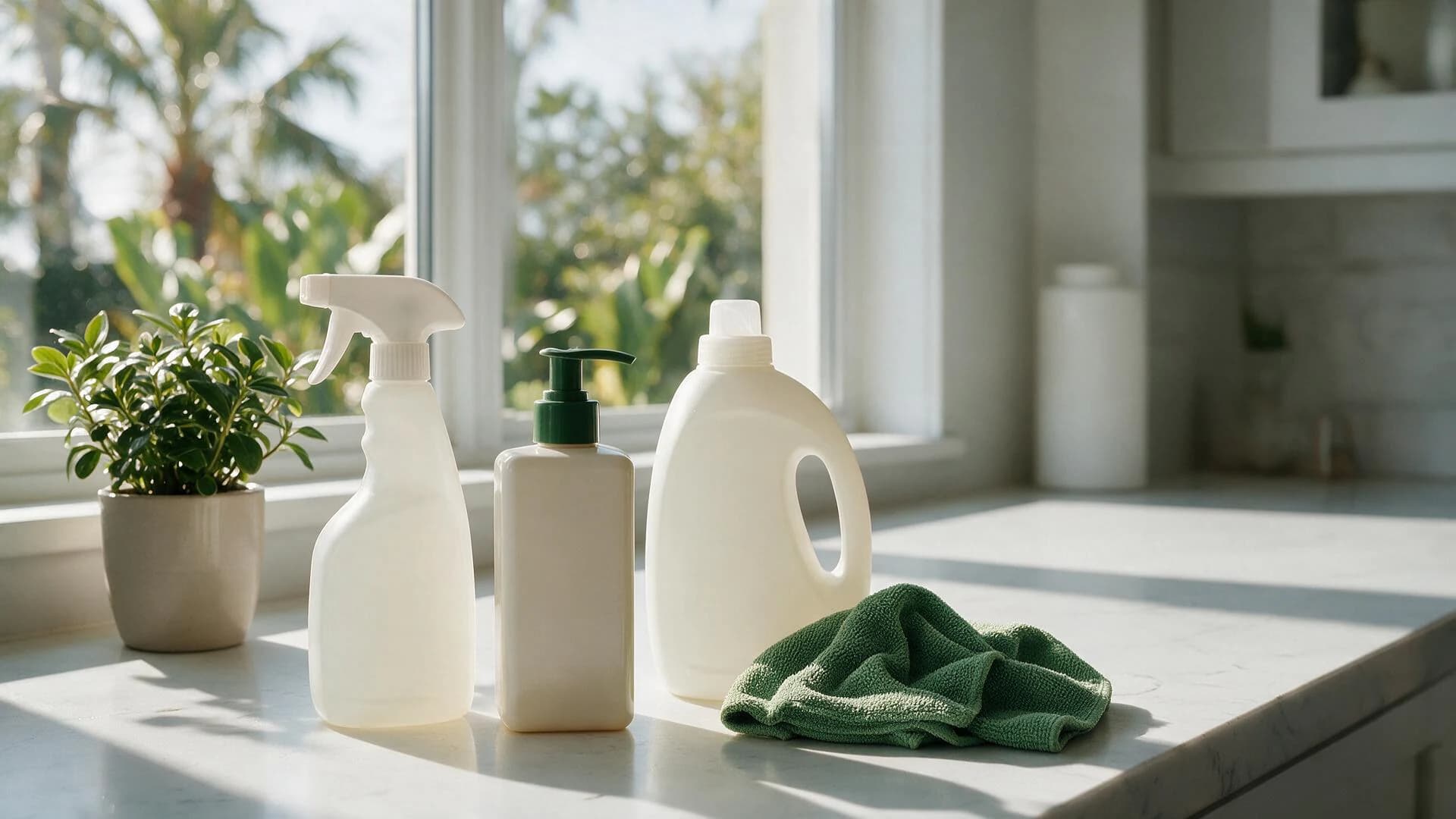
EcoHome Cleaning uses plant-based products for house cleaning in Jacksonville and nearby areas. If you are comparing cleaning products or cleaning services, "plant-based" is a fair place to start, but the word on a bottle leaves a lot open. It does not tell you what is inside, which surfaces the product is made for, or whether it disinfects.
This guide goes through each of those questions. It also shows you how to read a cleaning label yourself and which kinds of plant-based products suit each surface in a home.
What "plant-based" means on a cleaning label
A plant-based cleaner gets some or most of its working ingredients from plants instead of petroleum. Common examples:
- Cleaning agents, also called surfactants, made from coconut oil, palm kernel oil or corn sugar. They loosen grease and dirt so you can wipe or rinse it away.
- Solvents made from citrus, seed, vegetable and pine oils. EPA lists biobased solvents like these among the things to look for in greener cleaning products.
- Plant acids such as citric acid, which loosen hard water spots and soap scum.
- Plant-derived alcohol, often used in glass and surface sprays because it evaporates quickly.
Most products also contain water, and many contain minerals such as baking soda, which does not come from a plant. "Plant-based" is a description, and a label can use it without any outside review. The share of plant ingredients can also vary a lot from one product to the next.
Some products carry the USDA Certified Biobased Product label. A biobased product is made partly or fully from plants or other renewable materials, and this label prints the percentage of the product that comes from them. That gives you a number to go on, which the word "plant-based" alone does not.
Plant-based does not mean right for every person or surface
Ingredients from plants can still be strong. Some people are bothered by citrus or pine scents, and plant acids can etch marble. A concentrated product can also irritate skin or eyes if you use it straight from the bottle when the label says to dilute it.
So treat "plant-based" as a starting point and read the rest of the label: what the product is made for and how the maker says to use it. Do not assume plant-based also means fragrance-free, or that one formula will suit everyone in your home.
How to read a cleaning label yourself
These checks work for any cleaner, plant-based or not, and they cover most of what you need to know before you use a new product.
- Find what it is made for. Look for the surfaces listed on the label and any "do not use on" warning. A product made for glazed tile may not be right for marble or wood.
- Read the directions. Note whether you dilute it, how long it should sit and whether you rinse it off. Using more than the label says does not clean better, and it can leave a sticky film.
- Check the signal word. Caution, Warning or Danger tells you how careful to be. Read the first aid and storage lines too.
- Look for the ingredients. Many makers list them on the bottle or on their website, so this is where you check for an ingredient or scent you avoid. "Unscented" can still mean a masking scent was added, so look for "fragrance-free" if smell matters to you.
- Check any outside label, then look it up. EPA's Safer Choice label means EPA reviewed every ingredient in the product against its standard, and also looked at performance, pH and packaging. You can confirm a product in EPA's Safer Choice product search. For disinfectants and sanitizers, EPA uses the Design for the Environment (DfE) logo instead.
- Be careful with vague words. EPA's guide to greener cleaning products warns buyers about vague claims such as "environmentally friendly", "eco safe" or "green". A specific claim you can look up tells you more than a leaf printed on the bottle.
- If it says it kills germs, look for an EPA registration number. Products that claim to kill bacteria or viruses are registered with EPA. The label lists a registration number and a contact time, which is how long the surface must stay wet. A cleaner without that number is for removing dirt, so do not count on it to disinfect.
The words "plant-based" do not tell you whether a product has any of these labels or a registration number. If one of them matters to you, ask about the specific products before your visit.
Which plant-based products suit which surfaces
Homes in Northeast Florida mix a lot of materials: stone or quartz counters, tile showers, vinyl plank or wood floors, painted cabinets and plenty of glass. Treat the table as general guidance. It does not name products, and the care guide from the maker of your surface and the directions on the product always come first.
| Surface | Plant-based product types often used | Check before you clean |
|---|---|---|
| Sealed granite and quartz counters | A pH-neutral surface spray, or a few drops of plant-based dish soap in warm water | Follow the counter maker's care guide. Skip abrasive pads, which can dull the finish. |
| Marble, limestone and travertine | A pH-neutral cleaner labeled for natural stone | Avoid vinegar, lemon and citric acid cleaners. Acids can etch these stones. |
| Glass, mirrors and shower doors | A glass cleaner made with plant-derived alcohol, or a vinegar-based spray | Spray the cloth, not the mirror, so liquid does not seep behind the edges. |
| Glazed ceramic and porcelain tile | A plant-based bathroom or all-purpose cleaner, and a citric acid descaler for hard water spots | Rinse acid cleaners off well. Repeated acid use can wear down cement grout. |
| Sealed hardwood and vinyl plank floors | A pH-neutral floor cleaner made for that floor type, used with a damp mop | Standing water can damage wood and seams. Check the flooring guide before using oils or steam. |
| Stainless steel | Mild plant-based dish soap and water, then a dry microfiber cloth. A plant-oil polish if you like the look. | Wipe with the grain. Avoid chlorine bleach and steel wool. |
| Painted cabinets, doors and trim | A diluted plant-based all-purpose cleaner or dish soap | Use a soft cloth. Hard scrubbing can dull flat or satin paint. |
| Wood furniture | A dry or barely damp microfiber cloth. A plant-oil furniture polish only if the finish allows it. | Water left on wood can leave white rings. Too much polish leaves a film. |
| Toilets and sinks | A plant-based bowl cleaner or bathroom cleaner for daily grime | To disinfect, use a product with an EPA registration number and follow its contact time. |
If you are not sure about a surface, test a small amount in a hidden spot and let it dry before you judge the result. For new or delicate finishes, share the maker's care guide with your cleaner before the visit, and point out any damage or marks that are already there before work begins.
The healthiest way to clean your house
Products are only part of the answer. EPA's indoor air guidance notes that cleaning and disinfecting products can release chemicals into indoor air while you use them, and it suggests a few simple steps:
- Use household products the way the maker's directions say.
- Bring in plenty of fresh air while you clean. Open windows or run an exhaust fan.
- Never mix cleaning products unless the label tells you to.
- Keep products out of reach of children and pets.
- Buy amounts you will use soon, and get rid of old containers safely.
Some everyday habits help too. Dust with a damp microfiber cloth, which picks the dust up instead of pushing it into the air. Work from top to bottom and vacuum last. Start with the mildest product that does the job, and save stronger ones for the spots that need them. In humid months, dry shower walls and run the bathroom fan, because moisture helps mildew grow.
How EcoHome Cleaning uses plant-based products
We use plant-based products on our visits, and every visit follows a written checklist of tasks for each room. To read more about how we work, see our page on eco-friendly house cleaning in Jacksonville.
If you have a product or fragrance preference, mention it when you request an estimate. Ask which products we plan to use and whether we can work with your request. Tell us about children, pets and anyone in the home who reacts to scents or certain ingredients, so we can talk about products before the visit.
Match the cleaning to the service
Whatever products you prefer, the visit itself follows a task list. Our Regular Cleaning checklist sets out the work room by room, from "Clean countertops and backsplash" in the kitchen to "Clean and sanitize toilet" in the bathroom. For built-up residue, Deep Cleaning adds tasks such as "Hand wipe all baseboards", "Detailed cleaning of blinds" and "Removal of built-up grease, soap scum, and mineral deposits whenever possible".
Oven, refrigerator and cabinet interiors are add-ons to Regular Cleaning and Deep Cleaning, so request them in advance. If you are moving and the home is empty, the Move-In / Move-Out Cleaning checklist includes those interiors.
What to share before your Jacksonville cleaning visit
Send the home address, room counts, approximate floor area and the cleaning you need. Add any product preferences, surface care instructions, areas with buildup and the date you have in mind.
We clean homes across Jacksonville and the communities we serve nearby, from the beaches to Nocatee and Fernandina Beach. You can also read how EcoHome Cleaning works. When you are ready, use the quote form to request a free estimate. We confirm the estimate and any extras before the visit.
Frequently asked questions
What are some eco-friendly cleaning products?
Common eco-friendly choices include plant-based all-purpose sprays, dish soaps made with plant-derived cleaning agents, citric acid descalers for hard water, glass cleaners made with plant-derived alcohol, and baking soda for gentle scrubbing. Microfiber cloths and refillable bottles also cut waste. To compare products, look for a label you can check, such as EPA Safer Choice, instead of vague words like green.
What is the healthiest way to clean your house?
Clean often enough that you rarely need strong products. Dust with a damp microfiber cloth, work from top to bottom and vacuum last. Follow label directions, open windows or run a fan while you clean, and never mix products unless the label says to. Keep all cleaners out of reach of children and pets, and dry wet areas to slow mildew.
How do you know if a cleaning product is eco-friendly?
Look for a specific claim you can check. EPA's Safer Choice label means EPA reviewed every ingredient, and you can search the products that carry it on EPA's website. The USDA Certified Biobased Product label shows the share of plant or renewable content. Words like green, natural or eco safe tell you little on their own, so read the ingredients and directions too.
Do plant-based cleaners disinfect?
Many plant-based cleaners are made to remove dirt and grime, not to kill germs. Products that claim to kill bacteria or viruses are registered with EPA and show an EPA registration number and a contact time on the label. If a label has no registration number, use the product for cleaning, and choose a registered product when you need to disinfect.
Are plant-based cleaners a good choice for homes with kids and pets?
They can be part of a careful routine, but plant-based does not mean a product suits every person or pet. Read the warnings, use the amount the label says, store products out of reach, and let floors dry before kids and pets walk on them. Tell us about children, pets and any sensitivities when you request a quote, so we can talk about products first.
Written by EcoHome Cleaning. Review Eco-Friendly House Cleaning, compare all service checklists, or request a cleaning estimate.